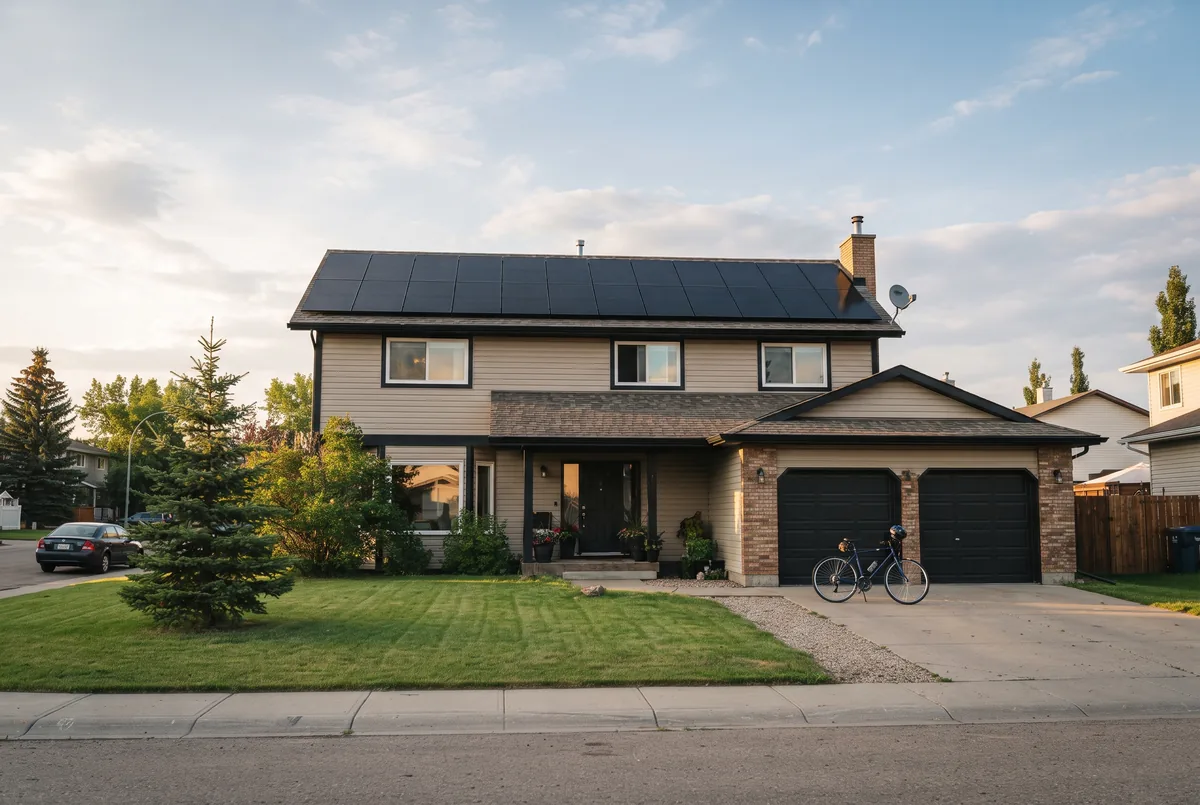
Homeowners
A system sized to a year of your bills, built for snow and hail, earning your retail rate on everything you export. Add a battery and the furnace keeps running when the power doesn’t.

Edmonton · St. Albert · Sherwood Park · Capital Region
Solar and battery backup for Edmonton homes, businesses, farms and off-grid properties. No rebate needed: we size to a year of your bills, show you the month-by-month output, and put the payback year in writing.
Why solar works here
Solar panels in Edmonton make sense for a simpler reason than most people expect. The City’s solar rebate is closed and the federal Greener Homes Loan has ended, but neither was ever the main event. What makes the numbers work is how Alberta pays for the power you send back to the grid: at your retail energy rate, on a plan you choose.
So we skip the grant talk and start with your bills. A typical EPCOR home uses about 7,200 kWh a year, which suits a 6–7 kW system. Sized that way, a 6 kW array costs from about $16,600 installed and pays back in roughly year 11 on a seasonal solar-club plan, or year 15 on a flat rate.
Call 250-250-2525 and within about fifteen minutes we can usually tell you whether solar is worth pursuing on your roof, including when it isn’t.

What we install
Swipe or scroll for all five. Not sure which you need? Call 250-250-2525 and describe your property.
 Residential Solar Panel InstallationRooftop solar sized to a year of your bills, built for Edmonton snow and hail.Learn more
 Commercial, Farm & Acreage SolarRoof and ground mounts for businesses, farms and acreages, with the 30% tax credit worked in.Learn more
 Off-Grid Solar SystemsStand-alone power with batteries and generator backup, sized for January rather than June.Learn more
 Solar Battery Storage & Backup PowerBackup for essential circuits when the power goes out, added to new or existing solar.Learn more
 Solar Panel Repair, Snow & MaintenanceOutput diagnosis, inverter replacement, hail inspections and cleaning, on any installer’s system.Learn more
The Edmonton sun year
At 53.5° north, Edmonton gets about seventeen hours of daylight in June and seven and a half in December. A solar array here makes most of its year’s energy between April and September, and very little in the weeks around Christmas.
Alberta pays for that pattern well. Exports are credited at your retail energy rate, and seasonal solar-club plans let you sit on a high rate (around 30¢/kWh) while you are exporting all summer, then switch to a low rate (around 7¢) for the winter, when you buy more than you make.
Who we work with
We help residents, businesses and off-grid owners across Edmonton and the Capital Region save on electricity and get their solar installed, by our own team or our vetted local contractors.
A system sized to a year of your bills, built for snow and hail, earning your retail rate on everything you export. Add a battery and the furnace keeps running when the power doesn’t.
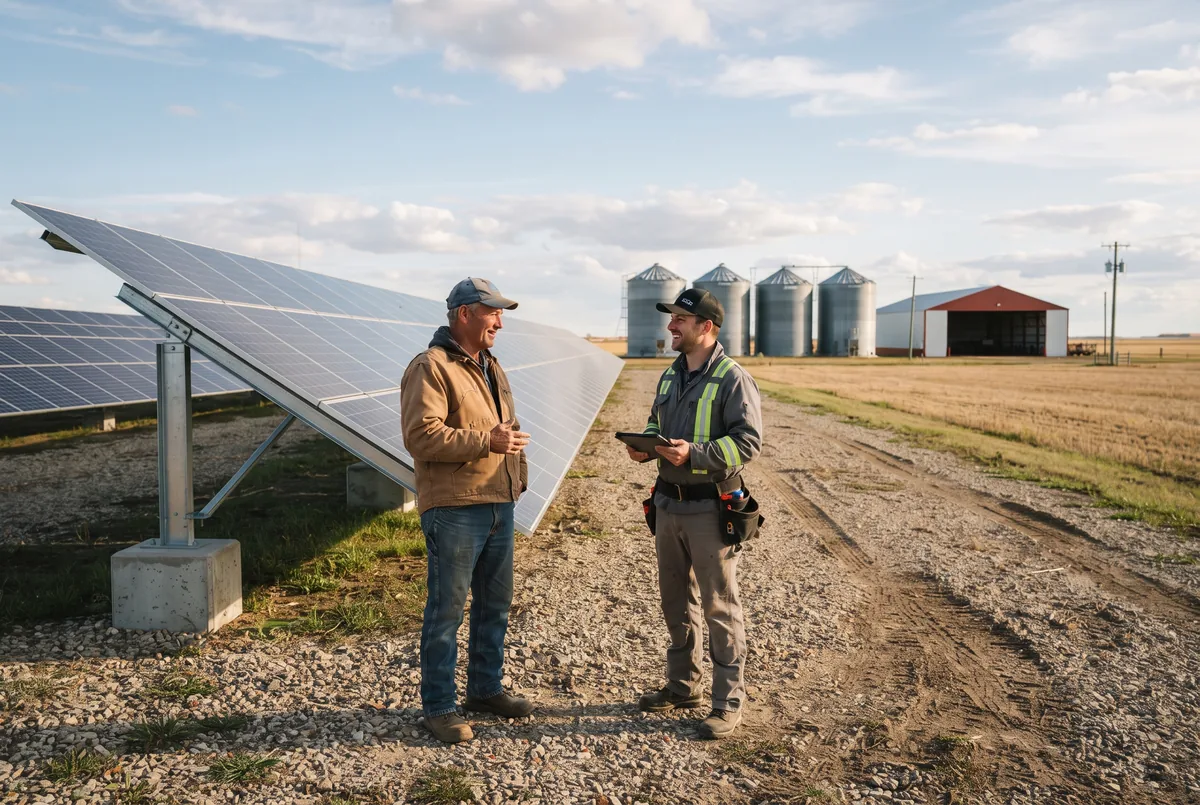
Warehouses, shops, grain sites and acreages with big roofs, open ground and daytime load. Incorporated businesses and farms can recover up to 30% through the federal tax credit.
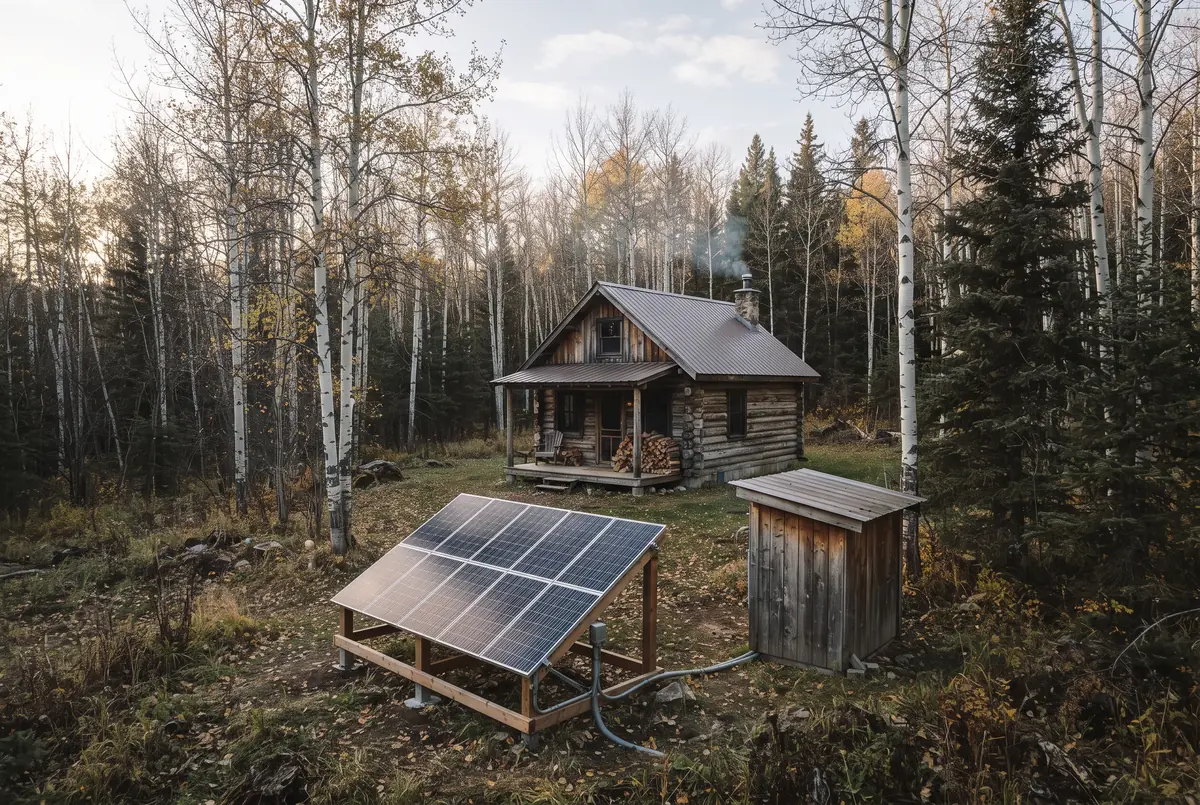
Cabins, remote shops and acreages where the line-extension quote came back huge. Battery and generator systems that run on their own through an Alberta winter.
Bill sizer
Find “kWh used” on a year of bills, or start from the Edmonton average. The sizer follows Alberta’s rule of sizing to your annual use and uses the same assumptions as our written estimates.
Showing the average EPCOR home: 7,200 kWh a year on a seasonal solar-club plan.
Estimate only: 1,150 kWh per kW a year, ~35% of output used instantly at home, exports credited at your energy rate (solar club ~30¢ April–September and ~7¢ October–March, or a flat 12¢), 5¢/kWh of avoided delivery charges, prices rising 2.5% a year. Payback uses the mid-range price. No rebate assumed. How we calculate
Straight numbers
Most installers won’t put a price on their website. We do, because the ranges aren’t a secret and knowing them saves you time.
A small system starts from $11,900 installed. Most Edmonton family homes land between $17,000 and $28,000. There is no rebate to subtract, so the payback depends on two things: sizing to your use, and the retail plan that credits your exports.
| System size | Suits | Installed from | Output / yr | Saving yr 1 | Payback |
|---|---|---|---|---|---|
| 4 kW | Small home or condo-style bungalow | from $11,900 | ~4,600 kWh | ~$920 | year 12 |
| 6 kW | Typical home (~7,000 kWh a year) | from $16,600 | ~6,900 kWh | ~$1,380 | year 11 |
| 8 kW | Larger home, central air | from $21,300 | ~9,200 kWh | ~$1,840 | year 11 |
| 10 kW | Large home, EV or heat pump | from $26,000 | ~11,500 kWh | ~$2,300 | year 11 |
Installed “from” prices. Each size assumes a home using about as much as the system makes. Savings on a seasonal solar-club plan; on a flat 12¢ plan they are about a third lower. No rebate assumed. Financing available.

When the power goes out
July storms, cold-snap equipment failures, a car into a pole down the block. A standard solar system switches off in an outage. Add a battery and your furnace blower, sump pump, fridge and internet keep running.
Process
Four steps, and you know exactly where you stand at the end of each one.
Twelve months of bills, your roof planes and shade, and your electrical panel. Most of it is done by phone and satellite imagery before anyone visits.
You learn whether solar suits your roof at all.
System size, month-by-month output, cost, financing and payback year, in writing with the assumptions shown. Battery options priced alongside.
A written quote you can compare line by line.
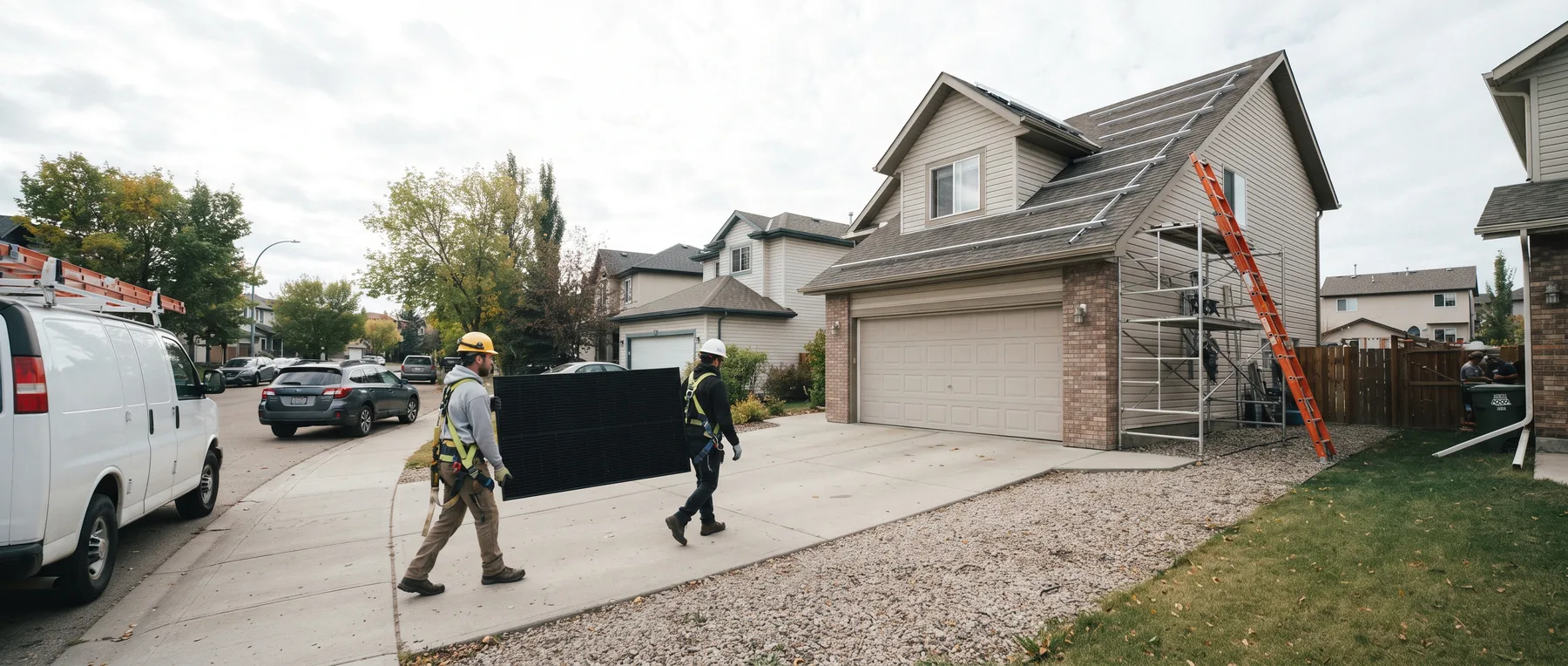
We file the micro-generation application with your wire owner and pull permits. Once approved, our team and vetted contractor partners install, usually in one to three days.
Nothing goes on your roof before it is approved.
Inspection, meter work by your wire owner and commissioning. We show you the monitoring app and help you choose a retail plan that credits your exports well.
A working system and a plan that pays you properly.
Where we work
Twelve Edmonton neighbourhoods and twelve Capital Region towns and counties, from St. Albert to Leduc and Spruce Grove to Ardrossan. If your property sits between two of them, we cover it too.
Why us

Questions
For many Edmonton homes, yes, even without a rebate. Alberta credits exported power at your retail energy rate, and solar-club plans pay a high rate in summer, when panels produce most. On those terms a well-sized system here pays back in roughly 11 to 13 years, against panel warranties of about 25 years.
On a flat 12¢ plan, payback stretches to about 15–17 years. A low-use home, a north-facing roof or heavy elm shade often doesn’t make sense, and we will say so.
Not cash rebates. The City of Edmonton’s solar rebate is closed, and the federal Greener Homes Grant and Greener Homes Loan are closed to new applicants. What remains is financing through Edmonton’s Clean Energy Improvement Program (CEIP), at 6% fixed for up to 20 years, which is currently waitlisted.
Incorporated businesses and farms can claim the federal 30% Clean Technology tax credit. The details are in our Alberta solar rebates guide.
A retail electricity plan for solar owners. Because Alberta credits exports at your energy rate, some retailers let you choose a high rate in summer (around 30¢/kWh), when your panels export most, and switch to a low rate in winter (around 7¢), when you buy most. The same rate applies to what you buy and what you sell.
“Solar Club” is one retailer’s brand; others sell similar seasonal plans. We have no affiliation with any of them. See how solar club plans work.
Yes, but they produce much less. In our model, December delivers about 2.5% of a year’s output and July about 13%. Cold actually helps panel efficiency; the short days and low sun are what cut production.
Snow usually slides off a pitched array within a day or two of sunshine. We lay panels out so snow can shed off the lower edge, and we don’t recommend clearing panels from the roof yourself.
Not on their own. A standard grid-tied system shuts off when the grid goes down, so it never sends power onto lines crews are working on. To keep power in an outage you need a battery and an inverter that can island the house.
With that in place, your chosen circuits, such as the furnace blower, sump pump and fridge, switch over automatically. See Edmonton power outages.
A free estimate starts with a short phone call. No pressure, no obligation, and a straight answer either way.
250-250-2525